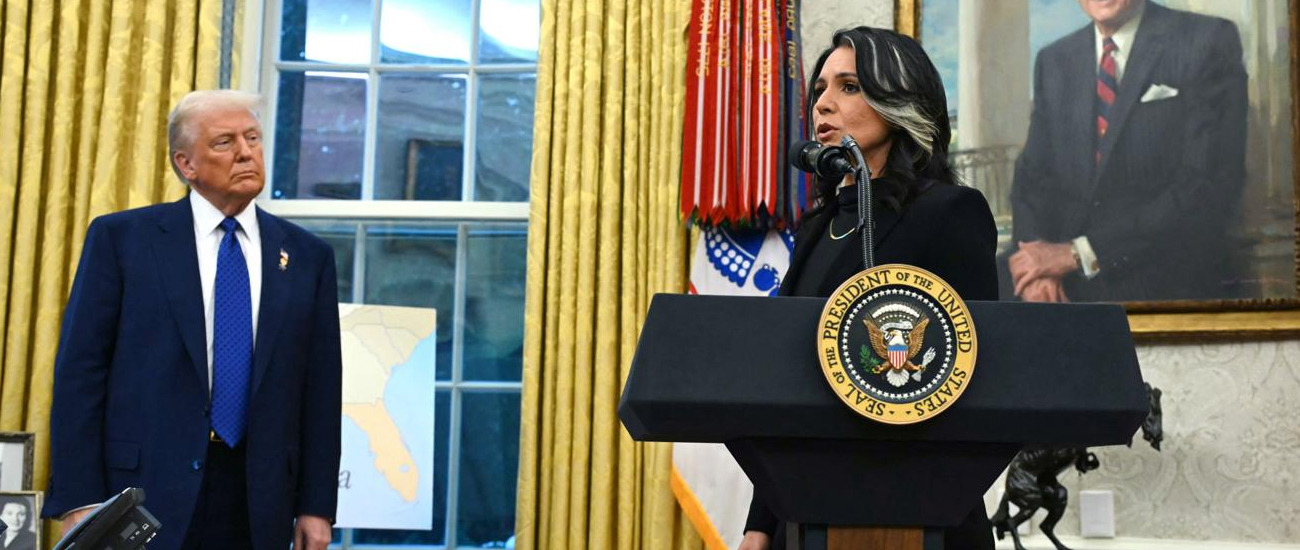
Breaking: Tulsi Gabbard Resigns as Trump Intelligence Chief Amid Political and Foreign Policy Controversy
Tulsi Gabbard’s unexpected resignation will send shockwaves through the political arena, given her controversial track record as Director of National Intelligence (DNI) under President Donald Trump. After a tumultuous few years working with Trump, Gabbard moved from one of his harshest opponents to one of his strongest supporters when she ran as a Democrat in the 2020 presidential election.
Gabbard’s resignation has sparked intense conversation on Capitol Hill and around the globe, as she is one of the most unusual yet diverse political figures in recent U.S. history. She has also been one of the leading sources of information for the Trump administration concerning national security issues.
The timing of Gabbard’s resignation will play a significant role in how the U.S. moves forward with its foreign policy decisions during a delicate time in the world’s geopolitical arena, as we see continued conflict between Iran, a controversial situation regarding Venezuela, and uncertainty about what will happen to America’s entire intelligence community.
While Gabbard cited her husband’s serious health condition as the reason for her resignation, many political analysts believe Gabbard’s departure may be indicative of issues within the Trump White House concerning war policy, intelligence operations, and ultimately the decision-making powers of the Executive Branch.
This article will examine the ramifications of Gabbard’s resignation as DNI, how she transformed into an independent within the Democratic Party, and what her departure from the Trump administration means for the future health of U.S. intelligence and its impact on U.S. foreign policy.
Tulsi Gabbard Resigns From Trump Administration
Tulsi Gabbard announced her resignation as Director of National Intelligence (DNI) via social media, including her Twitter account. In her announcement, as well as a letter from the President of the United States, her resignation states that she is grateful to have been given the opportunity to serve as DNI for nearly 18 months, and thanked the President for his trust in her throughout the length of her employment and for giving her this great opportunity.
President Trump has publicly recognised Gabbard for her resignation, expressed gratitude for her service to both the United States and to him personally, and pledged to continue supporting her once she leaves the office. Additionally, President Trump announced that his deputy, Aaron Lukas, will take over as Acting Director of National Intelligence upon Gabbard’s resignation.
The abrupt nature of this leadership transition has raised questions about political and strategic divides within the Administration.
INDICATIONS OF DISARRAY
The resignation of the current DNI during a period of multiple global crises indicates a potential degree of disarray within the entire U.S. National Security OrganisationOrganisation (NSO).
Moreover, Gabbard’s resignation could signal rising internal disputes over issues such as foreign policy and intelligence operations.
Tulsi Gabbard’s Husband’s Cancer Diagnosis
In a statement, Gabbard announced that she was resigning from Congress because her husband recently received a diagnosis of a rare type of bone cancer.
Since Gabbard’s announcement, the husband’s cancer diagnosis has generated much media attention, leading to widespread sympathy from the public.
Leaders from both political parties have expressed their support for her family during this period of crisis.
While Gabbard publicly cited personal reasons for her resignation, political analysts believe the timing reflected increased pressure on the administration regarding its military engagement policies.
Washington has seen considerable speculation about the relationship between the personal circumstances surrounding Gabbard’s resignation and international geopolitical struggles. Political Transformation.
Tulsi Gabbard’s political career has been one of the more unique pathways taken by any politician in recent US political history.
Gabbard came to national attention as a Democratic US congresswoman representing Hawaii.
She served in Congress from 2013-2021 and developed a reputation for being:
- Anti-interventionist
- Critical of regime change wars
- A member of the military
- Having independent political views
She served in the Hawaii Army National Guard and deployed to Iraq during Operation Iraqi Freedom.
Gabbard’s experience serving in Iraq during OIF had a profound impact on her perspective on foreign interventions and on her opposition to long-term U.S. interventions.
As the years progressed, the relationship between Gabbard and the Democratic Party leadership became more contentious.
Tulsi Gabbard Endorses Trump
When Tulsi Gabbard endorsed Trump after years of his condemnation, it was a big political surprise.
Gabbard’s support was largely based on his promise to reduce US military intervention abroad.
She also pointed out how the last administration (Bush and Obama) had nearly brought this country to an international war on many occasions.
This dramatic shift in political support surprised both Democrats and Republicans alike.
Eventually, she was appointed by Trump to serve as the Director of National Intelligence, thereby placing her in one of the key positions in the national security decision-making process, despite having little prior experience in intelligence.
Her appointment immediately incited heated debates throughout Washington.
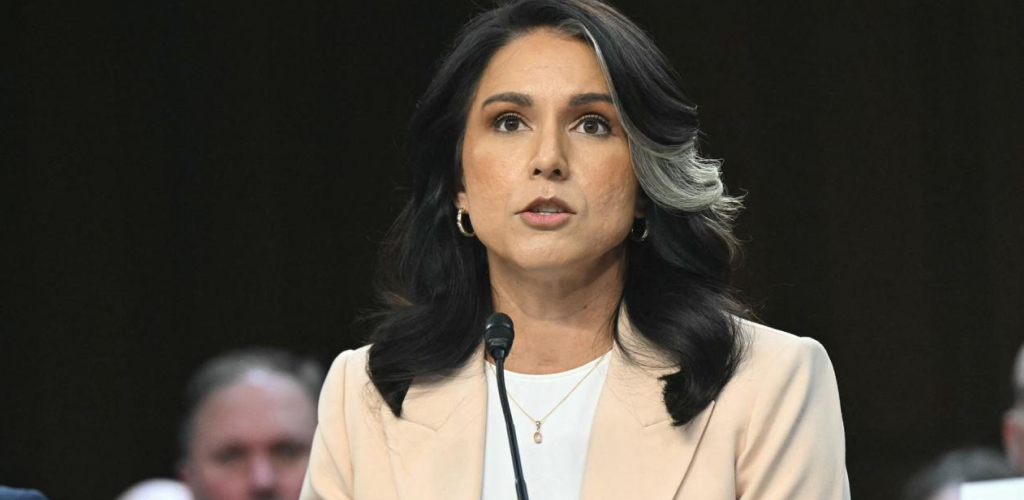
Donald Trump’s Intelligence Administration and Policy Changes
Since the start of the Donald Trump Intelligence Administration, there have been several controversial issues regarding the intelligence community’s operations, including investigations into election fraud and foreign policy decisions based on the lack of intelligence from foreign governments.
Many conservatives viewed Tulsi’s appointment as a step toward reforming what they often describe as a “politically motivated intelligence community.” Others were sceptical that Tulsi’s past experience would meet the traditional qualifications for the DNI role.
Gabbard’s leadership quickly became aligned with major issues involving the following areas:
- Venezuela Intelligence Reports
- The Iranian Conflict
- FBI Investigations of Elections
- Internal restructuring within the Intelligence Community
The political divide over the intelligence community has increased.
The Gabbard-Trump Iran War Situation
Of all the contradictions that have arisen during Tulsi Gabbard’s time in public office, one of the most important concerns the Trump-Iran War.
Gabbard’s identity as a politician was largely defined by her opposition to regime change and military engagement.
However, when the Trump administration’s conflict with Iran began to escalate, she publicly supported several of his military decisions concerning Iran.
This came as a shock to many of Gabbard’s longtime supporters, who consider her to be one of the most vocal anti-war voices in American politics.
In her statements, Gabbard stressed the fact that it is the president (not intelligence agencies) who ultimately determines what constitutes an “imminent threat” to the United States.
The position she took drew criticism from both progressives who oppose military intervention and foreign policy experts.
Many believed Gabbard had abandoned her previous beliefs against military action.
Evolution of Gabbard’s Position on the Iran Conflict
Gabbard’s position on this issue has changed significantly during her time in office.
At first, she was somewhat silent as tensions between the U.S. and Iran continued to increase.
Eventually, she made several strong public comments in defence of the Trump administration’s actions, describing them as necessary for national security.
Her public comments and support for the Trump administration’s actions regarding Iran made this one of the defining issues of her time in office.
Her supporters said she received more intelligence information than the general public, which led her to change her position.
Some Gabbard supporters argued that her loyalty to President Trump has caused her to abandon many of her previous foreign policy principles.
Disputes regarding Venezuela were at the forefront of the Admin
The Venezuelan Tren de Aragua report is the subject of controversy; the Intelligence Committee’s findings contradicted the White House’s assertions regarding cooperation between the Venezuelan government and criminal organisations.
As a result of this controversy, numerous National Intelligence Council (NIC) employees lost their jobs.
The NIC firings prompted allegations that the Admin had a role in setting policy for the Intelligence Committee and/or the Intelligence Community.
Critics asserted that the administration is forcing intelligence agencies to conform to its political narrative.
Supporters of the firings defended the removals as examples of the type of accountability reform required.
Tulsi Gabbard’s Comments on Venezuela
In her previous role, as a candidate for Congress, she frequently criticised U.S. efforts in Latin America against Venezuelan President Nicolas Maduro through regime change and declared her opposition to U.S. national security and foreign policy.
While serving in the Trump Administration as an Assistant to the President, she was much more reserved in her commentary and aligned herself with the Administration’s policies.
This transition further alienated her from many antiwar activists.
US Intelligence/CIA Controversy
Over several years, many politicians have accused the U.S. Intelligence community of being highly politicised.
Republicans often contend that the Intelligence Community has been politically biased in its findings.
Democrats frequently warn of the political meddling of the executive branch since Community’s work has established itself as a reform-minded politician focused on curtailing what she has described as the “weaponization of intelligence” and the “politicisation of the intelligence community.”
Her supporters lauded her attempts to improve accountability in the intelligence community.
Some critics believe that, in some aspects of her leadership, she tended to mix intelligence analysis with political loyalty.
Criticism of Tulsi Gabbard’s FBI Raid
Another significant point of contention for Gabbard concerns a previous critical media report detailing an FBI operation in which Gabbard was involved while working on an election-related issue at a Georgia election centre.
Several prominent Democratic figures have been outspoken, saying that Gabbard was acting outside the bounds of her official position.
Both of those issues have been made more controversial by the fact that President Trump continues to make unverified claims that the 2020 presidential election was stolen.
Many critics have expressed concern that intelligence agencies are politically active in America’s domestic controversies.
Despite that controversy, the administration has denied any wrongdoing and has given full support to Gabbard regarding any of her actions.
WHAT DOES THIS MEAN?
Gabbard’s time in office reflects an increasing synergy between domestic intelligence and the ongoing rise in political division and foreign policy disputes in the United States.
As time goes on, these will lead to a decrease in public confidence in their intelligence organisations.
Republican Leaders Support Gabbard
Even though Gabbard has been at the centre of a lot of controversy since she left office, many Republican leaders have come out in support of her and praised her.
Several praised her efforts to reform the intelligence community and challenge the inefficiencies of government operations.
Several of her supporters in the Republican Party pointed to her military service and her unwillingness to bow to bureaucratic opposition.
Republican leaders have especially appreciated Gabbard for her:
- Transparency initiatives
- Anti-bureaucratic efforts
- A more realistic foreign policy strategy
- Providing greater accountability from our nation’s intelligence community
Many of Gabbard’s supporters believe that, because of these things, Gabbard was able to provide a rare type of insight to the intelligence community.
2026 High Stakes for America’s Foreign Policy
Gabbard’s resignation came as the United States continues an ongoing and contentious debate about its role in the World. The issues dominating the debate include:
- Should America continue to engage in military conflict outside its borders?
- How much power should intelligence agencies hold?
- What does it mean to be an imminent national security threat?
- Should US foreign policy prefer diplomacy over military force?
Gabbard’s political evolution embodies many of these national debates.
Gabbard’s transformation from anti-war Democrat to Trump-appointed Director of National Intelligence (DNI) exemplifies the massive shifts taking place within American political coalitions.
Trump Administration Under Fire for War Decisions
The Trump Administration’s War decisions, including its involvement in Iran, Venezuela, and the larger Middle East, remain among the most polarising and controversial within the United States.
Critics of the Trump Administration believe it has failed to keep its earlier promise to reduce U.S. military involvement in foreign conflicts.
On the other hand, those who support the Trump Administration claim that the aggressive, deterrent strategies it has utilised have increased the overall US National Security interest.
Gabbard’s departure from office may prompt greater scrutiny from Political and academic analysts of the evolution of these same Policies.
Some analysts suspect that Gabbard’s comments after she leaves office may expose further disagreements with her former administration.
Leadership Transition of Fiscal Year 2027: Aaron Lukas as Acting DNI
As of press time, Aaron Lukas’ term as Acting Director of National Intelligence began immediately after Gabbard’s resignation.
With this quick turnover from Gabbard to Lukas, the future strategic direction for US Intelligence Leadership will be the subject of intense scrutiny by outside observers.
The following will be closely analysed as to whether the Trump Administration will select to:
- Maintain Continuity;
- Further Restructure the Chain of Command for US Intelligence Agencies
- More aggressive intelligence reforms
- Expanded executive control
The next DNI appointment could significantly shape the direction of US intelligence policy heading into the next election cycle.
WHY IT MATTERS
The Role of Leadership Change in Intelligence Agency Impact on National Security, International Relations, and Public Faith in Government
Leadership changes within an intelligence agency can affect national security, international relations, military strategy, domestic politics, and public trust.
Examples of leadership changes are frequently reflected by transitions in both domestic politics and international alliances.
Tulsi Gabbard’s Political Opinion and Controversy (US Politician)
Gabbard has generated confusion about her ideology, including allegations of contradictory beliefs and numerous controversies with the media, politicians, and the public, yet she has still been able to influence debate on military intervention, the powers of intelligence agencies, and new political alliances.
Even though she has faced a number of challenges in the past few years, it will still take time for the impact of her role to be clearly defined.
The military and intelligence agency reforms established by the Trump administration during Gabbard’s term may continue to evolve even after she leaves office. Such reforms may include:
- More extensive executive authority
- Restructuring of intelligence agencies
- More extensive political accountability
- New intelligence agency head
Concerns about the potential for any intelligence agency to become politicised will remain a national issue, as the relationship between intelligence agencies and elected officials is one of the most sensitive aspects of American democracy.
WHAT THIS MEANS
The resignation and departure of Tulsi Gabbard as Director of National Intelligence will likely signal another major development in the U.S. intelligence community.
Leadership changes in the coming years may radically alter how the Intelligence Community conducts its operations.
Future Outlook
While the future of Tulsi Gabbard’s resignation cannot be determined, one thing seems clear: its impact will extend well beyond one individual leading a transition period.
Some of the significant future questions that might arise following Gabbard’s resignation and departure include:
- Will she seek re-election?
- How will she publicly respond to the administration’s foreign policies?
- Will the Intelligence Community’s direction and operations differ from previous leadership?
- Will there be further polarisation over foreign policy, or will the two sides unite behind either the war in Iraq or the war in Afghanistan?
Analysts expect continued debate over the balance between intelligence and presidential powers.
The intelligence leadership will play an increasingly critical role in the geopolitical crisis involving Iran, the deteriorating relationship with Venezuela, and the continuing deterioration of global security.
Her departure represents a personal transition; however, it could also mark a much larger turning point in American foreign policy.
????????????????????????????????????????????????????????????????????????????????????????????????????????????????????????????????????????????????
Conclusion
Tulsi Gabbard’s resignation will create significant changes in the course of U.S. history in the last decade.
Her experience will have an ongoing impact on U.S. Foreign Policy for the foreseeable future, and will continue to shape the American.
Her background and education not only reflect her knowledge of the intelligence community but also indicate how transformational events and movements shape our society.
Although the official explanation for Gabbard’s resignation was her husband, many could see that it came at a time when geopolitical tensions were rising. Therefore, many will now speculate about the reason for her resignation.
Gabbard’s impact on American conversation about war, intelligence gathering, and presidential authority cannot be denied, regardless of whether one sees her as a reformist, loyal to herself as a former member of Congress, or someone with a more independent political outlook.
Her departure raises significant questions about the future direction of the US government’s intelligence leadership and foreign policy under the Trump administration, in an uncertain political climate.
Frequently asked questions (FAQs)
1 Why did Tulsi Gabbard resign?
Filling out her resignation form, she believed the primary blow for her resignation was her husband, who had recently been diagnosed with a rare bone cancer.
2 Who will replace Tulsi Gabbard as DNI?
Because she is stepping down as DNI, there is currently no acting director; therefore, Aaron Lukas will serve as acting DNI until a new permanent DNI is appointed.
3 What is Tulsi Gabbard known for politically?
Her most notable qualities as an elected official are her anti-interventionist stance on foreign policy, her service in the military, and her independent political views.
4 Why was Gabbard a source of controversy during the Trump Administration?
Criticism from both parties stemmed from evolving positions she took on issues as important as foreign intervention and Iran and Venezuela, and from proposals to reform intelligence processes and elections.
5 Was Tulsi Gabbard a Democrat when she started?
Yes, she represented her district as a congresswoman before eventually endorsing Donald Trump.
6 What were some majorly confusing or controversial things that occurred while Gabbard served as DNI?
Major controversies and confusion included the number of disputed intelligence reports, which hindered FBI investigations, external factors influencing private versus public policy concerning Venezuela and decisions being made about the use of force between the U.S. and Iran.
7 Does Tulsi Gabbard have the potential to become politically active again in the future?
Most analysts feel that she may still be used as an influencer in future debates on national security and foreign relations.