Rubio’s India Visit Sparks Global Energy & Trade Talks Amid Iran Crisis
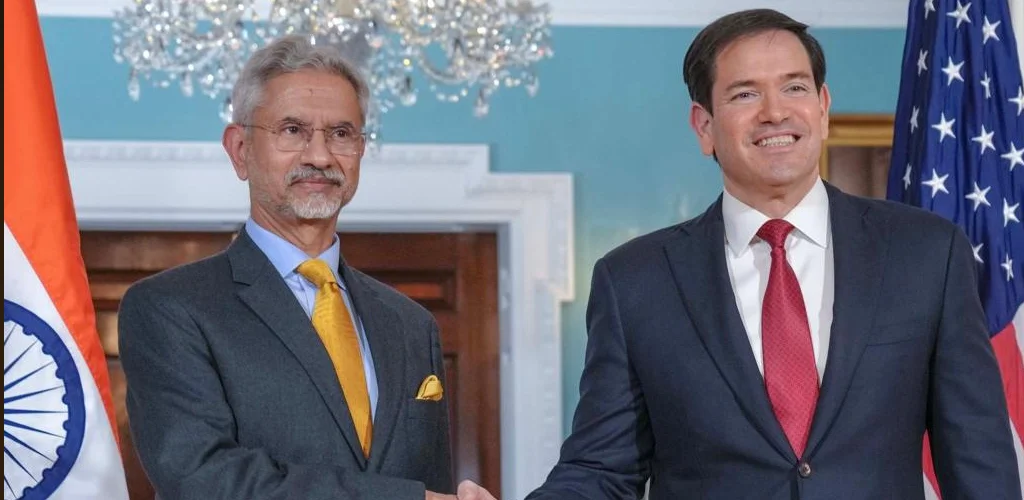
Marco Rubio’s recent diplomatic mission to India is receiving plenty of attention due to multiple factors, including escalating global oil market tensions stemming from unrest in Iran and through the Strait of Hormuz. Against this backdrop, Rubio’s India visit demonstrates a growing urgency to both solidify and advance the US-India energy partnership while working to stabilise global supply chains and ultimately address security challenges in the Indo-Pacific region.
The continued disruption to oil shipments through the Strait of Hormuz has left India, one of the world’s largest energy importers, at the forefront of an evolving geopolitical storm. By deepening strategic cooperation between Washington and New Delhi through the Rubio India energy talks, both the United States and India can work together to advance trade agreements, energy exports, and regional security partnerships.
As a part of the Rubio India energy talks, it is expected that both the US and India will place an emphasis on providing alternative energy supplies to India, reducing vulnerabilities linked to the instability in the Middle East, and build on the economic relationship that has been established over many years by both democratic nations.
As they move forward with the Rubio India diplomatic mission, the two nations will also face ongoing geopolitical complexities involving China, Pakistan, BRICS, tariffs, and competition in the Indo-Pacific.
This article looks at the importance of Rubio’s recent trip to India for purposes of overhauling energy systems in the face of the Energy Crisis (India energy crisis) in 2026, the status of the future US/India trade deal and what influence these are likely to have upon the rest of the world politically and economically.
Marco Rubio India Visit | Why It’s Important
Rubio arrived in India during arguably the most volatile period in global energy politics in recent years.
Rubio will be visiting:
- Kolkata
- Delhi
- Jaipur
- Agra
The prime focus of his trip will likely be high-level discussions with Indian Prime Minister Narendra Modi and senior Indian government officials.
Arguably, the core issue discussed will be global energy security
The India-Iran oil and transit issue has recently escalated amid international turmoil and shipping disruptions in and around the Strait of Hormuz, which is arguably one of the most significant oil transportation chokepoints.
Any further disruption to energy imports/exports to/from India would put significant economic pressure on India, as it is a net importer of more than 80 per cent of its energy.
This has added significance to Marco Rubio’s diplomatic mission to India for both countries.
WHAT THIS MEANS
Rubio’s mission signals increased strategic alignment, as both countries are responding to heightened instability in energy markets and to what appears to be a rising risk to regional and international security, amid changing global dynamics in international trade.
The 2026 India energy crisis is an increasingly large economic issue for New Delhi.
India’s large population and industrialised economy heavily depend on imported goods:
- Crude oil
- Natural gas
- Petroleum products
- Cooking fuel
The Strait of Hormuz shipping crisis has affected shipping routes to India dramatically, due to increased tensions with Iran, Israel and the United States.
With strategic proximity to the Strait of Hormuz, Iran has an outsized influence on global energy transportation.
Therefore, any disruption in the region would directly affect nations that rely on foreign fuel sources, such as India.
Analysts have warned that if instability persists, there will be:
- Higher inflation rates
- Shortages of fuel
- Increased costs to transport goods
- Slower economic growth
The above are all reasons why the Rubio-Houlahan India Energy Talks have received so much global attention.
Importance of U.S. Energy Exports to India
A main goal of Rubio’s trip is to increase U.S.-India energy trade.
The U.S. has become one of the world’s top producers of energy, mainly because of:
- Production of shale oil
- Export of liquefied natural gas
- Increased exploration and drilling for oil in the U.S.
Rubio publicly stated that the U.S. wishes to sell “as much energy to India as India will buy.”
This strategy is part of a broader U.S. effort to strengthen partnerships with other nations while reducing dependence on unstable energy sources from the Middle East.
Manufacturing and shipping energy from the United States to India is:
- More costly
- Logistically difficult to organise
- Time-intensive to accomplish
Even with these factors in mind, both governments appear interested in developing their long-term relationship.
India is Vulnerable due to Fuel Import Dependency.
India is vulnerable to fuel import dependence, one of its most significant vulnerabilities.
India imports most of its crude oil needs from other nations.
This creates a level of exposure to:
- Global conflicts
- Shipping disruptions
- Fluctuations in the value of foreign currency
- Geopolitical tensions
The current crisis between India and Iran over oil illustrates how large economies are vulnerable to geopolitical instability affecting trade routes.
As a result, India is making a considerable push to diversify its energy supply.
The United States-India energy partnership may become an integral part of India’s diversification strategy.
Donald Trump is Supportive of Energy Diplomacy with India
Beyond the normal ebb and flow of trade relations between the United States and India, Mr Trump’s trade policy toward India has matured.
While there has been a great deal of tension between Washington and New Delhi over trade, it appears that both sides have come to realise the interdependence of their respective economies.
Mr Trump has consistently encouraged India to purchase more consumables from the United States, such as:
- Energy Sources
- Aircraft
- Defense Commodities
- Agricultural Products
- Technology
The administration believes that increasing exports to India will help the United States reduce the significant trade deficit with India. In 2025, the United States was estimated to have a $58.0 billion trade deficit with India. This imbalance has long-term scratching Mr Trump’s head.
Questions Regarding the Reliance Industries Texas Refinery Project
The proposed Reliance Industries refinery in Texas has been one of the more intriguing topics of discussion in trade circles lately.
Previously, Trump claimed that Reliance Industries could invest up to $300 billion in one of the largest oil refineries in Texas.
However, Indian business leaders have remained largely quiet about the proposal.
This uncertainty raises broader questions about how much of what has been announced will actually happen and whether any of these proposed projects are truly feasible.
Despite this uncertainty, there appears to be ever-increasing emphasis on energy cooperation, and both countries are working towards even greater long-term collaborative projects in this regard.
Stability of Indian Exports to the US in 2026
While India’s exports to the United States are expected to remain stable through 2026 amid tariff disputes and geopolitical uncertainty, some analysts are beginning to discuss the resilience of India’s export growth, even though high tariffs have remained in place for several of those periods.
Crisil Research analysts stated in their analysis of India’s export performance that the drop in tariffs has supported export growth across multiple sectors.
The strength of bilateral trade indicates that these two economies remain closely tied, despite significant political tensions.
The economic connection adds yet another layer of significance to Rubio’s diplomatic trip.
Trade Analysis Between India and India With Regards To Where The World Is Going
HSBC’s analysis of India’s trade has illustrated how the country is diversifying its global economic relationships.
In addition to the above, the Government of India has been pursuing Free Trade Agreements over the past several years with nearly all member countries in the European Union, as well as with Australia, the United Kingdom, and Oman. These Free Trade Agreements are indicative of Delhi’s desire to mitigate its dependence on any one global trading partner.
India is simultaneously balancing its relationships with the United States, Russia, China, and Middle Eastern countries.
The aforementioned strategic balancing act defines Indian foreign policy today.
India, Russian Oil Waiver, and Strategic Balance
One of the more sensitive discussions surrounding Rubio’s upcoming trip to India concerns the India-Russia Oil Waiver.
Despite the US placing sanctions on Russia for its actions against Ukraine, Washington has previously given India some leeway regarding their purchases of Russian oil.
Their argument is that affordable energy importation is vital to India’s economic stability.
As to the rationale behind the US’s toleration of this position, it dictates India’s rapidly increasing importance as a counterweight to China.
That said, India’s balance between the US and Russia remains delicate.
It is likely that Rubio will discuss ways to reduce India’s reliance on Russian energy by increasing US oil supplies.
What Does This Mean
The above paragraphs demonstrate that India is trying to maintain an independent foreign policy while simultaneously becoming more closely aligned with the United States amid rapid changes in the global geopolitical landscape.
The mediation dispute between India and Pakistan has created a new rift between Washington and New Delhi.
In the past, President Trump claimed he had mediated a peace agreement during a brief conflict between India and Pakistan.
New Delhi denied these claims and reiterated its refusal to accept third-party mediation as previously stated.
The topic of third-party mediation remains politically sensitive in New Delhi.
The issue was recently brought to light when President Trump praised Pakistani military chief Asim Munir, which unsettled Indian officials.
President Trump’s comments regarding General Munir illustrate how complex diplomacy in South Asia can be.
Although Senator Rubio will probably not publicly address the above issues, many peripheral diplomatic issues are politically relevant and will be factors in discussions between New Delhi and Washington.
Increased Focus of Quad Foreign Ministers Meeting
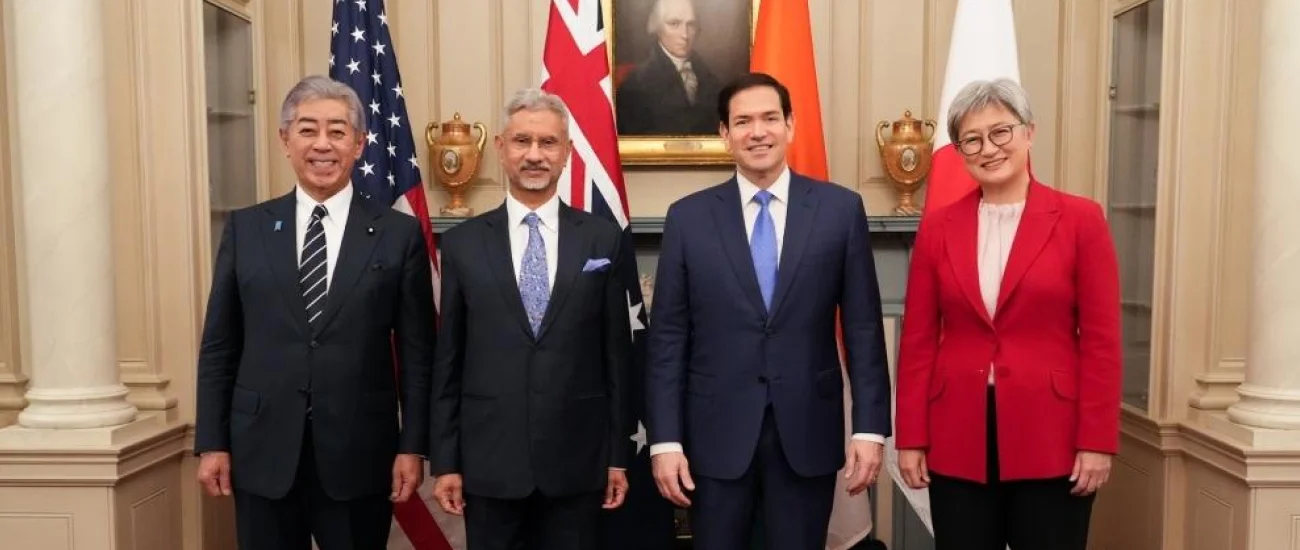
The Rubio Quad meeting will probably focus heavily on Indo-Pacific security issues.
The Quad Foreign Ministers Meeting includes:
- United States
- India
- Japan
- Australia
When first established, the Quad member nations worked together as an alternative strategic response to China’s increasing regional importance.
However, ambiguity has recently developed over the future of the Quad alliance.
Some analysts contend that Trump’s shift in foreign policy has undermined the Quad alliance’s progress.
China Quad Strategic Competition Intensifies
Alternatively, many observers believe it has never been more important to maintain the Quad partnership, given the increasingly serious challenge China poses to regional stability.
The rivalry between the China Quad and the United States has escalated as one of the key geopolitical factors currently shaping the Indo-Pacific region.
Another major factor shaping the future of the Quad alliance is that both India and the United States view China’s growing economic and military influence as a long-term challenge.
The end goal of the Quad nations (the US, India, Japan and Australia) includes enhanced security cooperation with respect to:
- Maritime security
- Supply chain resiliency
- Technology development and cooperation
- Coordination of defence policies.
Rubio’s visit provides an opportunity to strengthen the Quad alliance’s cohesion amid heightened tensions.
Rising Indo-Pacific Geopolitical Tensions
The geopolitical tensions within the broader Indo-Pacific region are not exclusively related to relations with China.
Concerns regarding geopolitical tensions in the region now include:
- The crisis in Taiwan.
- Disputes in the South China Sea.
- Disruption of supply routes by maritime trade.
- Cyber attacks.
- Establishing mutual defence alliances.
Within the evolving geopolitical landscape, India has a unique geopolitical position.
The United States has increasingly recognised India’s potential as a partner for democracy and to balance regional power relations.
Complicating the situation is that India will host the 2026 BRICS summit, which includes:
Brazil, Russia, India, China, South Africa, Iran, and Saudi Arabia.
This will add yet another layer of complexity and diplomatic balancing for India.
The Indian government aspires to deepen its relationship with the United States, while simultaneously engaging in alternative international organisations that sometimes counter the Western sphere of influence.
Thus, Rubio’s visit represents a bilateral diplomatic initiative for each of these two great democracies.
SIGNIFICANCE
India’s foreign policy decisions are playing an increasingly large role in shaping the world’s trade, energy markets, security arrangements, and the overall balance of power.
US India geopolitical relations are entering an era of greater complexity and strategic relevance than ever before.
The new partnership encompasses:
- Energy
- Trade
- Defense
- Technology
- Security in the Indo-Pacific
The two nations have aligned interests regarding:
- The rise of China
- Global instability of energy markets
- The creation of resilient supply chains
- Competition in the global economy
Yet there are also significant points of disagreement regarding trade tariffs, regional diplomacy, and military strategy.
This combination of shared interests and differences defines the current phase of US-India relations.
IMPLICATIONS
Rubio’s trip reflects the growing importance of India as a critical strategic swing power in the future of the global order.
FUTURE OUTLOOK
The long-term effects of Marco Rubio’s trip to India could be far-reaching.
There are several important potential developments to watch for in the months ahead:
- More US energy exports to India
- New bilateral trade agreements
- Strengthened coordination through the Quad
- Increased security cooperation in the Indo-Pacific region
- Abundant strategic alignments between the two nations
While these all represent promising developments, there remain grave challenges to progress.
India is committed to balancing its relationships with Russia, China, and BRICS nations while deepening ties with Washington, DC.
Global energy markets remain uncertain due to the ongoing conflict in the Middle East.
Should the situation in the Strait of Hormuz worsen, US-Indian energy partnerships would be extremely important.
Furthermore, many are questioning whether the Quad alliance will regain some legitimacy following increased diplomatic measures/involvement.
The significance of Rubio’s visit extends beyond normal diplomatic relations between two friendly nations.
This visit illustrates how India will become increasingly important in determining the future of the global economy, energy security, and geopolitical stability.
Conclusion
Marco Rubio’s trip to India will take place during one of the most volatile periods in recent international relations.
The stakes for the diplomatic visit are very high.
The following are affected by the outcome of the energy talks between Rubio and Indian officials:
- Global energy markets
- Trade negotiations
- Coordination on security matters within the Quad, an informal alliance formed by the United States, Japan, India, and Australia
- Stability in the Indo-Pacific Region
- Strategic relationship between the U.S. and India
The U.S. and India will have an increasingly vital partnership as both nations navigate economic challenges, political rivalries, and new alliances.
The coming months will tell whether Rubio’s visit marks a major shift in one of the world’s most significant geopolitical relationships.
Frequently Asked Questions (FAQ):
- What is the purpose of Marco Rubio’s trip to India in 2026?
Marco Rubio’s trip to India will include discussions about energy security, trade negotiations, and Indo-Pacific strategic cooperation.
- What will be the focus of the Marco Rubio India Energy Talks?
Rubio’s visits will focus on ways for the U.S. to increase its energy exports to India amid ongoing disruptions from the Iran oil crisis.
- How is India impacted by the Strait of Hormuz crisis?
Because India imports a large share of its energy (over 80% of its total energy supply), it is extremely susceptible to disruptions in shipping caused by political unrest in the region.
- What is the purpose of the Quad meeting?
The Quad Foreign Ministers Meeting will focus on security and regional stability throughout the Indo-Pacific, while attempting to create a “balance” against China.
- Are India and the U.S. negotiating a free trade deal?
Yes, both countries are working out the details of a large, bilateral free trade agreement covering tariffs, exports, and areas of mutual concern (for example, national security).
- What importance does China play in U.S.-India relations?
The rise of China’s influence in the region is a major factor driving increased strategic cooperation between India and the United States.
- Why is the BRICS Summit significant for India?
The BRICS summit is a demonstration of India’s efforts to balance its relationships with both the West and emerging alliances worldwide.